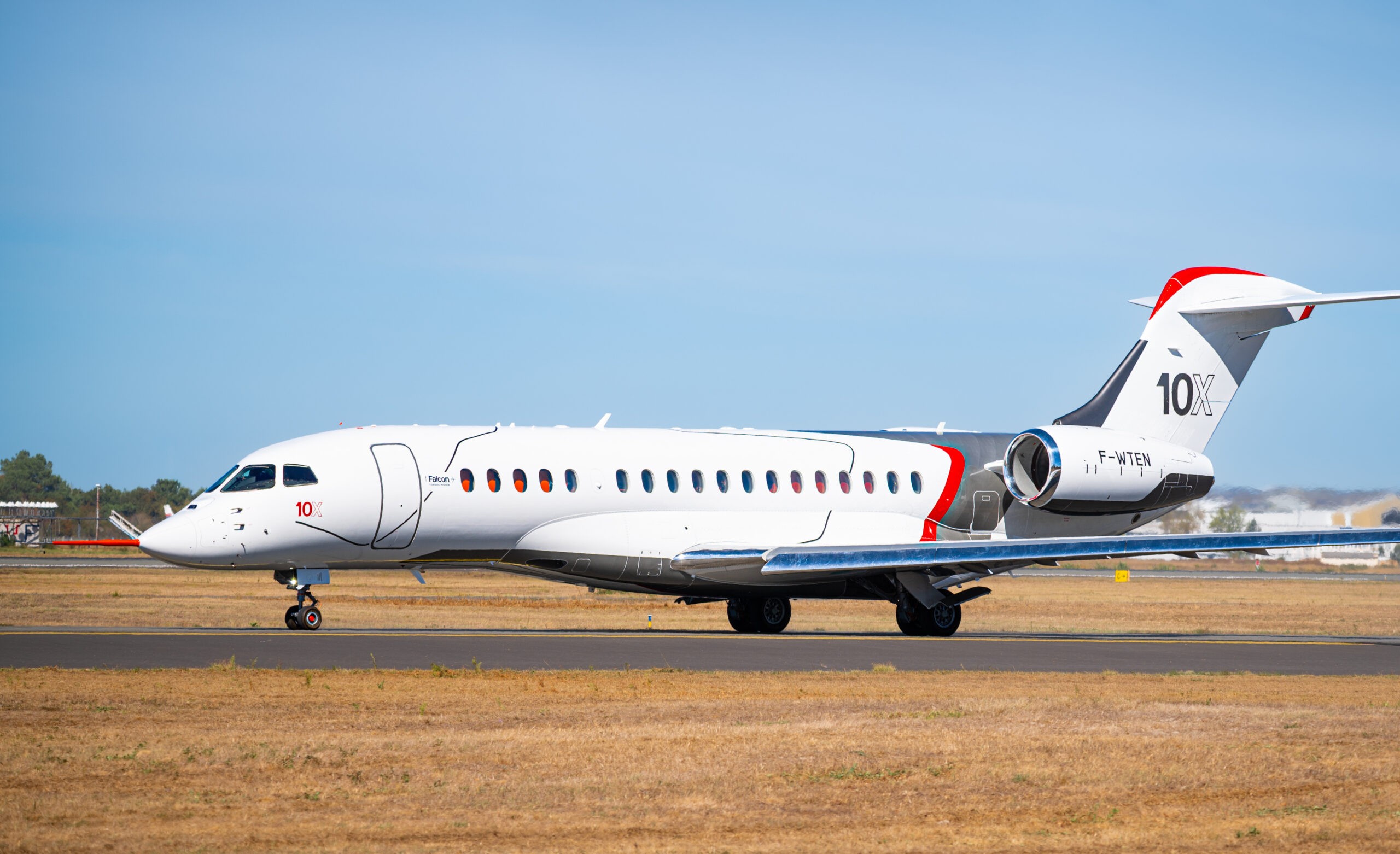
The second test aircraft for Dassault's new flagship, the Falcon 10X, was photographed in factory paint at Bordeaux-Mérignac airport in mid-October by Raphaël Savry. With a second airframe joining the flight test programme, certification moves a step further along. Dassault is targeting service entry in 2029.
The 10X's chief claim is its cabin. The fuselage is 109 inches, 2.77 metres, wide, among the broadest in business aviation. Maximum range is 7,500 nautical miles, or 13,890 kilometres. The wing is composite, saving about 900 pounds, 408 kilograms, over a metal wing, which with a 33.7-degree sweep allows a maximum operating Mach number of 0.925.
Dassault's design choices differ from its rival's. Where Gulfstream avoids leading-edge devices and conceals the flap mechanisms inside the wing, the 10X uses leading-edge devices and exposed flap-track fairings. The nose section is sculpted for laminar flow, cutting both drag and flight-deck noise. Two test aircraft now flying in paint says certification is in the air, not on paper.
Service entry in 2029 is late against the competition. Gulfstream's G800 is already delivering, and Bombardier's Global 8000 competes in the same segment. Dassault has always argued with speed, cabin width and short-field performance, and the 10X pushes all three at once. What remains is for the certification schedule to hold.
KEY FACTS
- The second Falcon 10X test aircraft was photographed at Bordeaux-Mérignac in mid-October 2026
- Its 109-inch (2.77-metre) fuselage is among the widest cabins in business aviation
- Maximum range is 7,500 nautical miles with a maximum operating Mach of 0.925
- The composite wing saves about 408 kilograms over a metal wing
- Dassault targets service entry in 2029
If you believe this article contains an error, you may request a correction or a right of reply under our corrections policy. Write to press@ateliermbent.com.
NEXT · JET Gulfstream G300 certification slips to 2027, and 200 deliveries by 2030 →