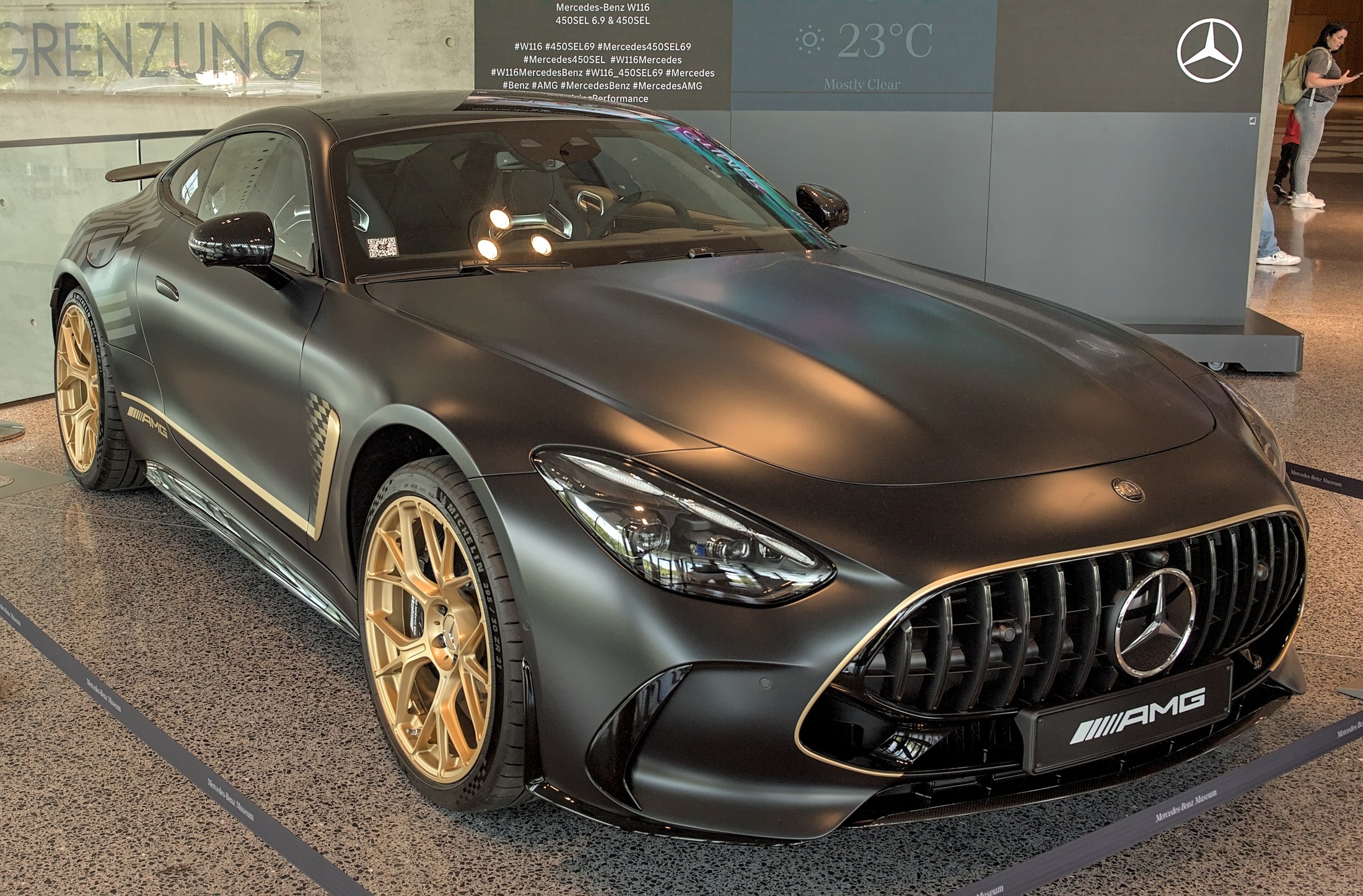
The AMG GT was the first sports car developed entirely by Mercedes-Benz's performance division when it appeared in 2014, and its front-engine, rear-drive layout earned wide praise. The second generation changed the recipe: a new platform, all-wheel drive as standard and two rear seats.
The 4.0-litre twin-turbo V8 produces 585 hp and 800 Nm through a nine-speed automatic and variable all-wheel drive. Mercedes-AMG quotes 3.2 seconds to 100 km/h and 315 km/h. The GT 63 S E Performance adds a motor to the same engine for 816 hp.
The body mixes aluminium, steel and carbon, with weight split 54:46 front to rear. Double wishbones at both ends work with adaptive dampers and air springs, and rear-axle steering is standard. Air curtains in the front bumper and an extending rear spoiler manage airflow.
Inside, an 11.9-inch portrait centre display and a 12.3-inch instrument panel handle information, but physical controls remain: two knobs on the wheel change drive mode, suspension and exhaust note independently. Sports seats are standard with carbon-shell buckets optional.
The GT 63's position is narrow but clear. It is larger than a 911 Turbo and more sporting than a DB12, and it now has rear seats. The decision behind the second generation was to widen the car's use rather than chase the extremes of performance, and that decision defines its character.
FAKTA KUNCI
- The second-generation AMG GT was unveiled in 2023
- A 4.0-litre twin-turbo V8 produces 585 hp and 800 Nm
- Nine-speed automatic with variable all-wheel drive, 0-100 km/h in 3.2 seconds
- A 315 km/h top speed with rear-axle steering as standard
- The GT 63 S E Performance produces 816 hp
Bila Anda menilai artikel ini memuat kekeliruan, Anda dapat meminta koreksi atau hak jawab lewat prosedur koreksi kami. Tulis ke press@ateliermbent.com.
BERIKUTNYA · MOTORS BMW SKYTOP: fifty targa roofs, fifty cars →