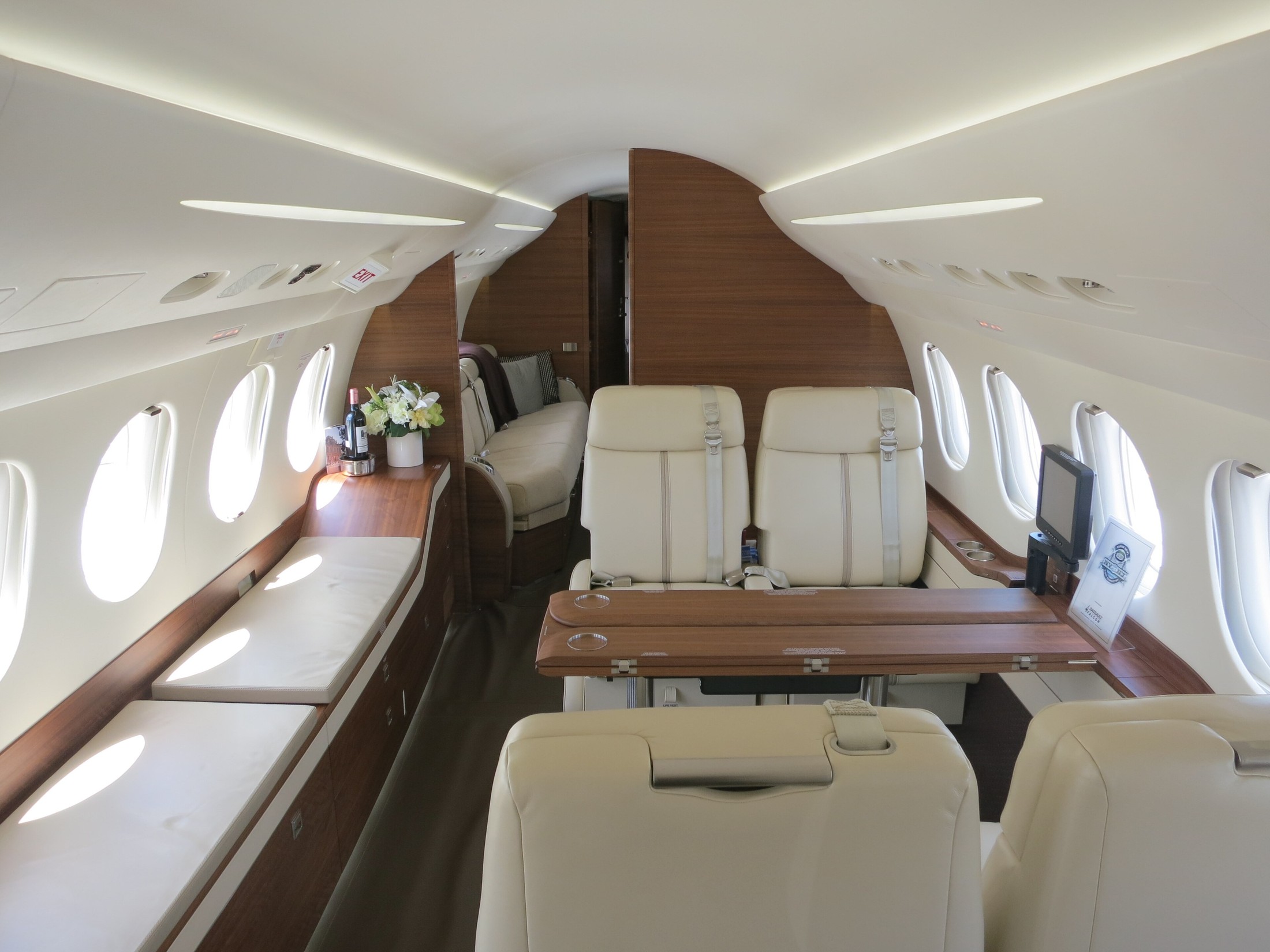
A business jet is bought as an airframe and finished separately. Manufacturers build the fuselage and engines; completion centres design and install the interior. Greenpoint Technologies in the United States, F/List in Austria and Comlux in Switzerland are among the best known, and they decide the character of the aircraft.
Noise is the first criterion. Cabin noise comes from engine vibration and airflow, so completion centres layer acoustic insulation inside the fuselage and mount interior panels on vibration-isolating fittings. The target is below 50 decibels in cruise, close to a quiet office.
Air comes second. Cabin altitude and ventilation determine how tired passengers feel. Recent aircraft hold cabin altitude as low as 2,900 feet and supply 100 percent outside air, and completion centres add filtration and humidification. On a long flight the difference shows on arrival.
Materials come third. Leather is sourced from Italian and British tanneries, timber is finished open-pore and matte, and carpet must be flame-resistant and certified for flight. Recycled aluminium and plant-based leathers are increasingly used. Weight governs every choice: a kilogram converts into fuel and range.
A completion takes six to twelve months and costs fifteen to twenty-five percent of the airframe price. What is decided is not taste but the balance of noise, air and weight. That balance is why the cabin, rather than the aircraft type, determines a private jet's worth.
要点
- Private jet cabins are designed and installed by completion centres
- Greenpoint Technologies, F/List and Comlux are among the best known
- Noise targets sit below 50 decibels in cruise
- Recent aircraft hold cabin altitude as low as 2,900 feet
- Completions take 6 to 12 months and cost 15 to 25 percent of the airframe
如认为本文与事实不符,可依更正与答辩程序提出请求。联系邮箱 [email protected]。
下一篇 · WATCH ROLEX Submariner Date 126610LN: the diver's standard, measured again →